1976


Gustave Courtois - Death of Orpheus (1875).



1977
Cracks in the Pantheon dome. Restoration works, ca. 1925. Photographer (?)

1978
Salinar Nose ornaments from the little-known Salinar culture, which flourished in the coastal river valleys of northern Peru from around 200 B.C.–300 A.D., are among the earliest body adornments discovered in the region. Collection: The Met, NYC.

1979
Marcus Aurelius, fragment of a bronze portrait. Roman artwork, after 170 AD. Photographer: Marie-Lan Nguyen. Collection: Louvre Museum.

1980
St. Matthew writing his Gospel. Detail, Gospels, Britanny, late 9th or early 10th century. Collection: Bodleian Library, MS. Auct. D. 2. 16, fol. 28v.


1981
Pendant in the shape of a ram-headed falcon (gold, lapis-lazuli, turquoise and carnelian), found on the mummy of an Apis bull in the Serapeum of Memphis at Saqqara. Date: Reign of Ramesses II. New Kingdom, 19th Dynasty, ca. 1279-1213 BC. Now in the Louvre Museum.

1982
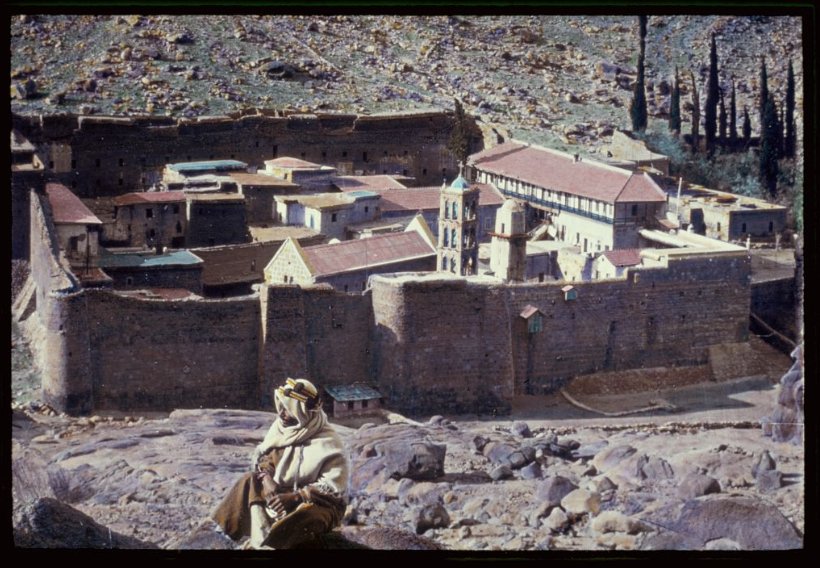
Sinai: Monastery of St. Katherine, close view. Photographer: Matson Photo Service. Created / Published between 1950 and 1977. Built between 548 and 565, the monastery is one of the oldest working Christian monasteries in the world.
1983
Tomb plaque marker on a tortoise base. Date: A.D. 219–316. Medium: Limestone. Collection: Dallas Museum of Art.

1984
Right Eye from a Greek statue, c. 500–100 BC. Made of marble, obsidian, glass, and copper, 2,1 x 4,9 cm. Collection: The J. Paul Getty Museum.

1985
Jason and His Teacher by Maxfield Parrish (1870–1966). Medium: oil on canvas. Private collection.

1986
The 5,400 year-old Mesopotamian 'Gebel el-Arak Knife', made with elephant ivory and flint. The engraving depicts their king as Master of Animals. Date: c. 3300 - 3200 BC. Now on display at the Sully wing, 1st floor, Louvre Museum.

1987
Toad-shaped perfume bottle. Place of origin: Rhodes (possibly), ca 650-525 BC. Photographer Marcus Cyron via Wikimedia Commons. Collection: Antikensammlung Berlin.

1988
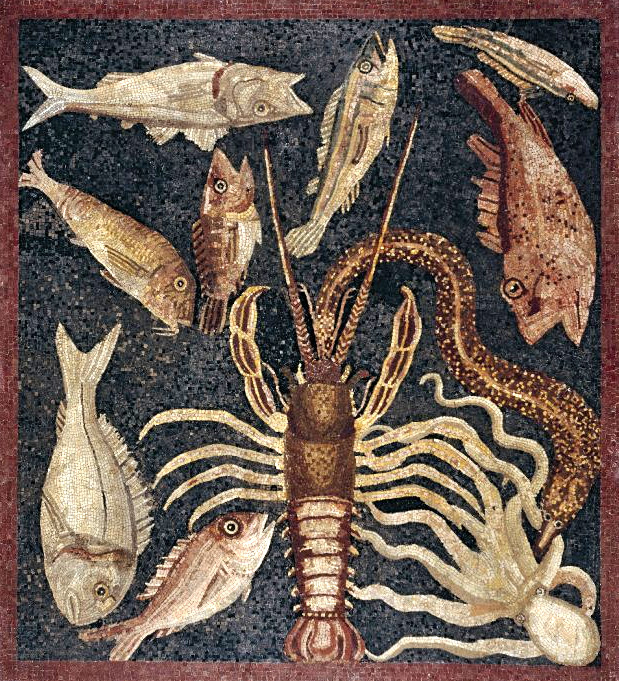
Panel from a mosaic floor: edible fish from the Mediterranean area. It probably decorated a dining-room. Excavated/Findspot: Populonia, Livorno, Italy. C. 100 AD. Collection: British Museum.
1989
Detail, Love on the Look Out by William-Adolphe Bouguereau (1890).

1990
Great helmet / Topfhelm of Hans Rieter. Date: 14th century. Medium: Iron. Collection: Germanisches Nationalmuseum, Nuremberg. Such helmets were worn by mounted fighters in battle and tournaments in the Middle Ages.


1992
Watercolour copy by Howard Carter (1874-1939) of a painted scene showing the Horus falcon from the mortuary temple of Queen Hatshepsut at Deir el-Bahri, Egypt, 1895. Gouache on paper. Griffith Institute, University of Oxford.

1993
The Lyre from Ur. The Lyre of Ur or Harps of Ur are considered to be the world's second oldest surviving stringed instruments after the ones discovered in the Maykop culture.

1994
Vyaghra Gumpha - Udayagiri and Khandagiri Caves, India, c. 1st century BC. The word vyaghra means "tiger". The inscription found here tells that this cave belongs to the city judge Sabhuti. Photographer: Balajijagadesh via Wikimedia Commons.

1995
Ruins at Mitla, Oaxaca, México, circa 1875. Photographer: Teobert Maler.

1996
Bat. Detail from the , ‘Livre des propriétés des choses’ (French translation of ‘De proprietatibus rerum’), Bartholomeus Anglicus Paris c. 1400. BnF, Français 16993, fol. 178v.

1997
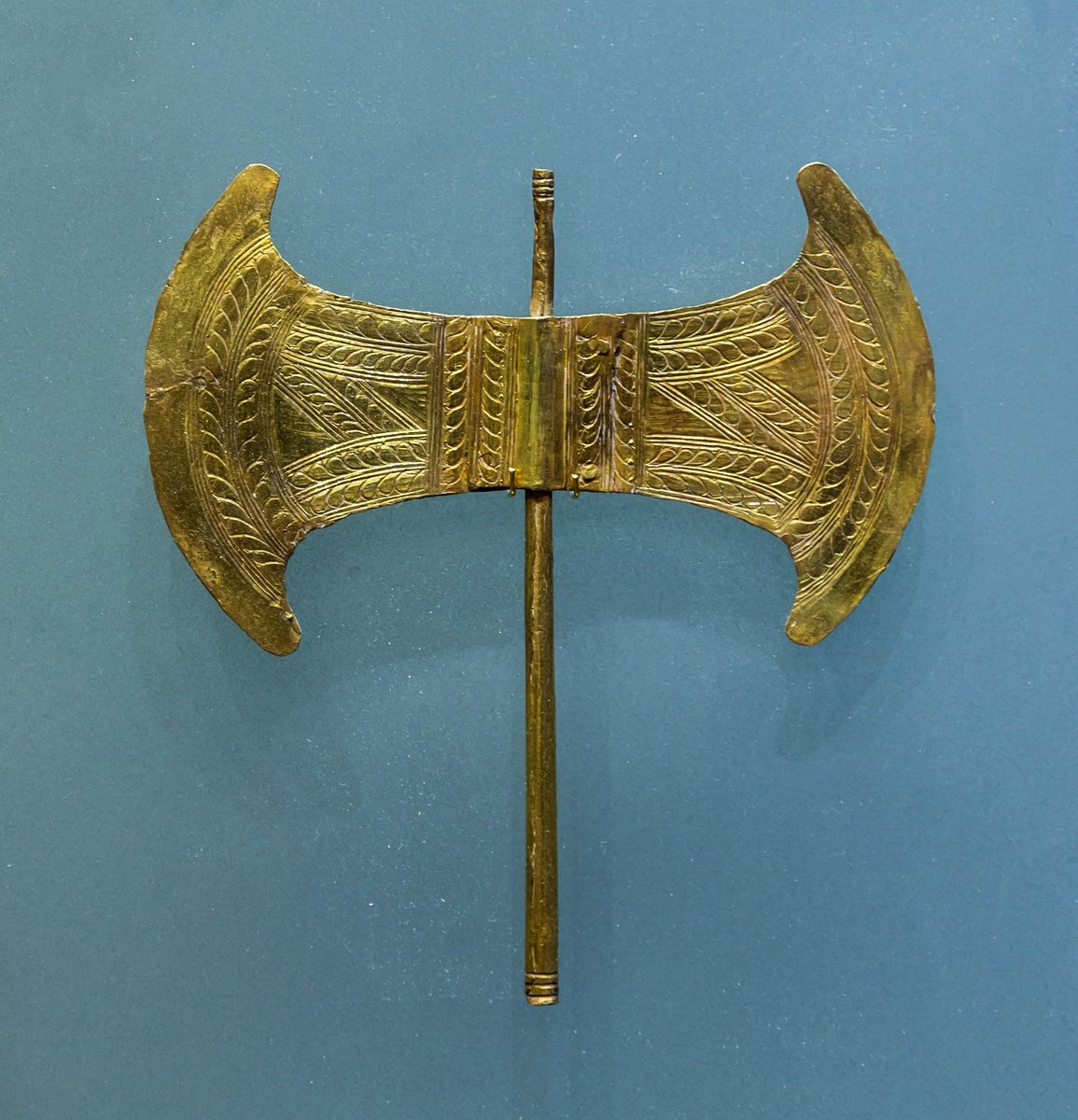
A small golden double head minoan axe. Votive jewel. Found in Archalokori cave, 1700 - 1450 BC. Now on display at the Heraklion Archaeological Museum, Crete, Greece. Photographer: Jebulon via Wikimedia Commons.
1998
Bowl with Leg Shaped Handle. Date - Culture: c. 850 BC & Attica Greek, Greece. Now on display at the Altes Museum, Berlin, Germany. Photographer: Gary Todd via Wikimedia Commons.

1999
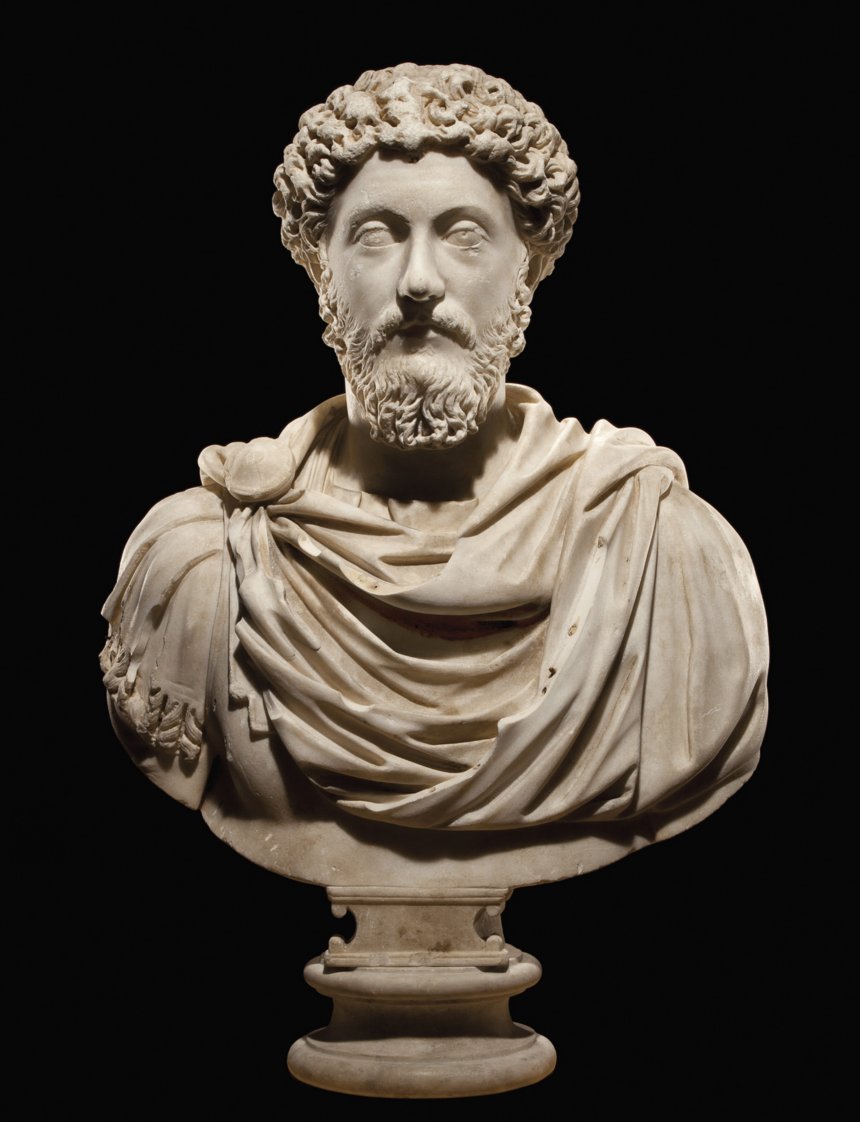
Portrait Bust of Marcus Aurelius, c. A.D. 170–180. Medium: Marble; 90.2 × 60.2 × 23 cm. Collection: Art Institute of Chicago.
2000
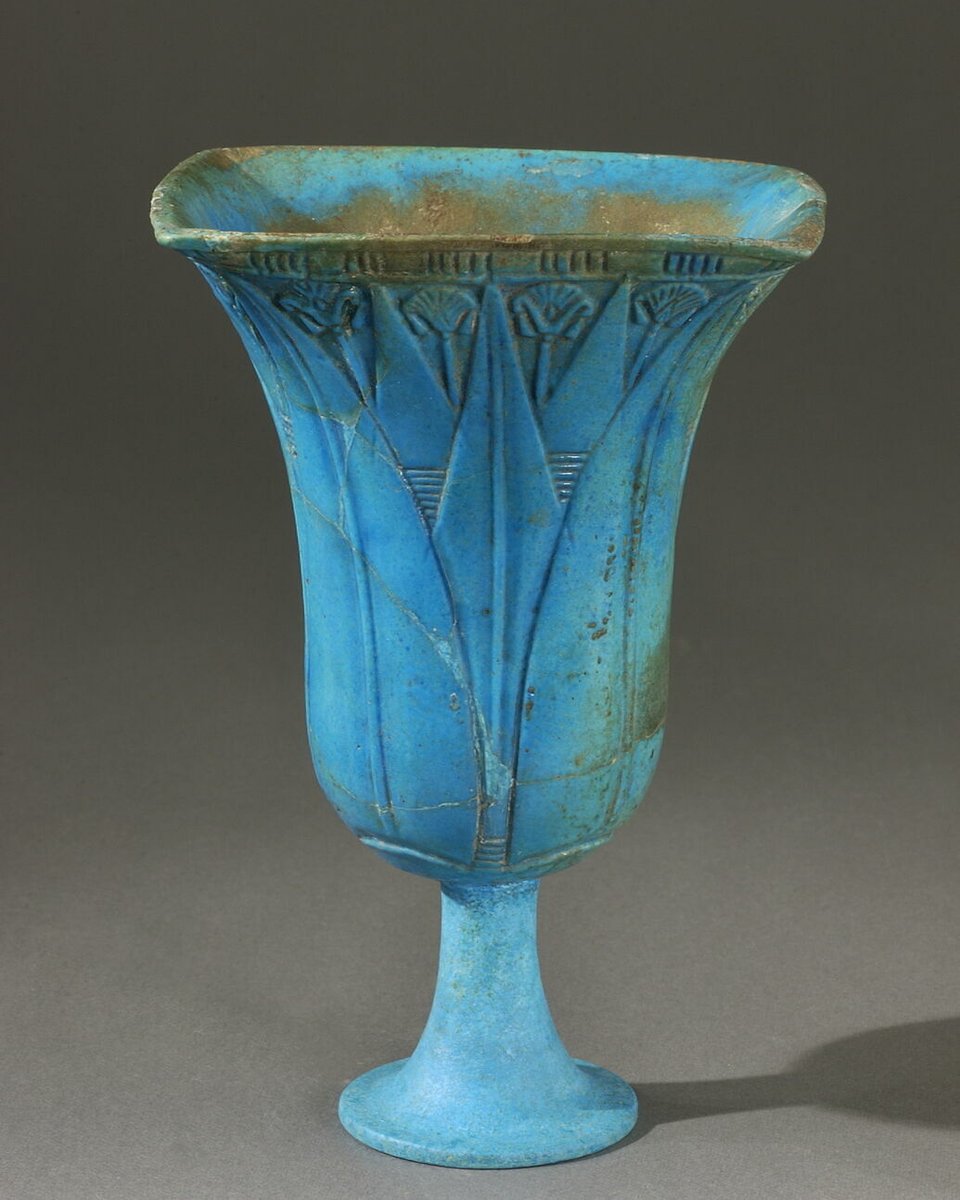
Faience chalice in the form of a lotus, Egypt, 945 - 715 BC. Height: 14.4cm. Collection: Louvre Museum.

Archaeology, Art, Museums, Vintage Maps, Old Photos and more. Shop account: @archaeostore Click our bio link for our designs, and more ⬇️⬇️