1951


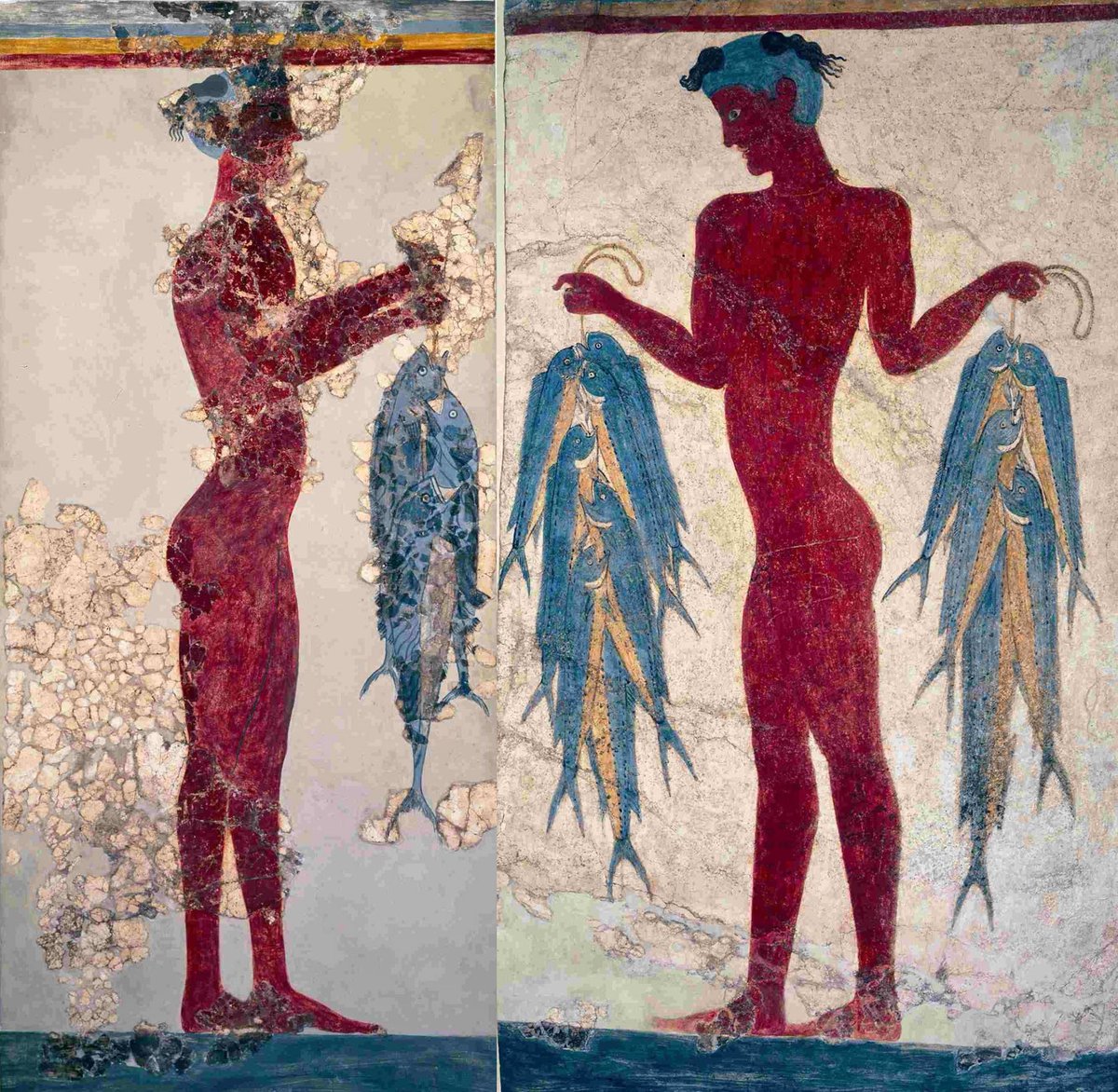
The Fishermen Frescoes from Akrotiri on the Aegean island of Thera (modern-day Santorini). c. 17th century BC. Now on display at the National Archaeological Museum, Athens. The males may actually be youths offering fishes as part of a religious ceremony rather than a fisherman.


1952
Winged scarab Amulet of a winged scarab, made of Egyptian faience. Late Period, ca. 664-332 BC. Private Collection.

1953
Shropshire bulla is a Late Bronze Age gold pendant found by a metal detectorist in 2018 in Shropshire, England. The pendant, decorated with intricately carved geometric designs, is now in the British Museum in London. Photograph: British Museum.

1954
Danse Macabre, fresco by Simone II Baschenis (1495 - 1555). Chiesa di San Vigilio (Pinzolo), Italy. The Danse Macabre is an artistic genre of allegory of the Late Middle Ages on the universality of death.

1955
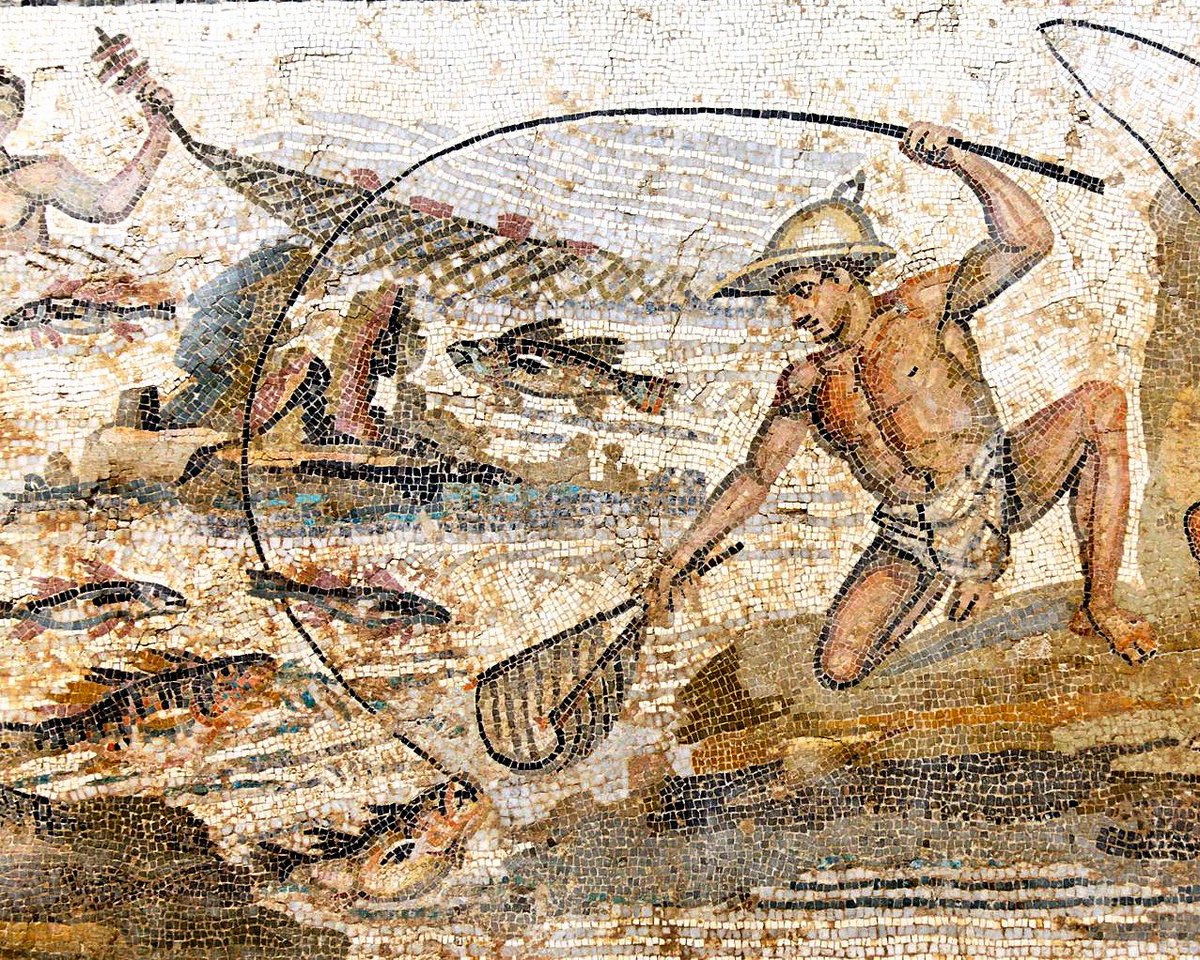
Mosaic representing fisherman (detail), Villa Nile (Lepcis Magna), Roman period (3rd c. AD), 380 x 118 cm. Now on display at the Tripoli National Museum, Libya.
1956
The Birth of Venus (details) by Sandro Botticelli (1483 - 1485). Collection: Uffizi Gallery, Florence, Italy.


1957
The Imperial Crown. Place of origin: West Germany.Date: 2nd half of the 10th century; Crown cross addition of the early 11th century.Medium: Gold, enamel, gemstones, pearls. It is now kept in the Imperial Treasury at the Hofburg in Vienna, Austria.

1958
Armour (Chihal'ta Hazar Masha). Place of origin: Northwestern India, Rajasthan Date: 18th - 19th centuries Medium: Fabric, steel, copper. Collection: Hermitage Museum, St. Petersburg.

1959
The golden diadem of the princess Meda, found in the tomb of Philip II of Macedon. Aigai, Macedonia, Greece. 4th century BC.

1960
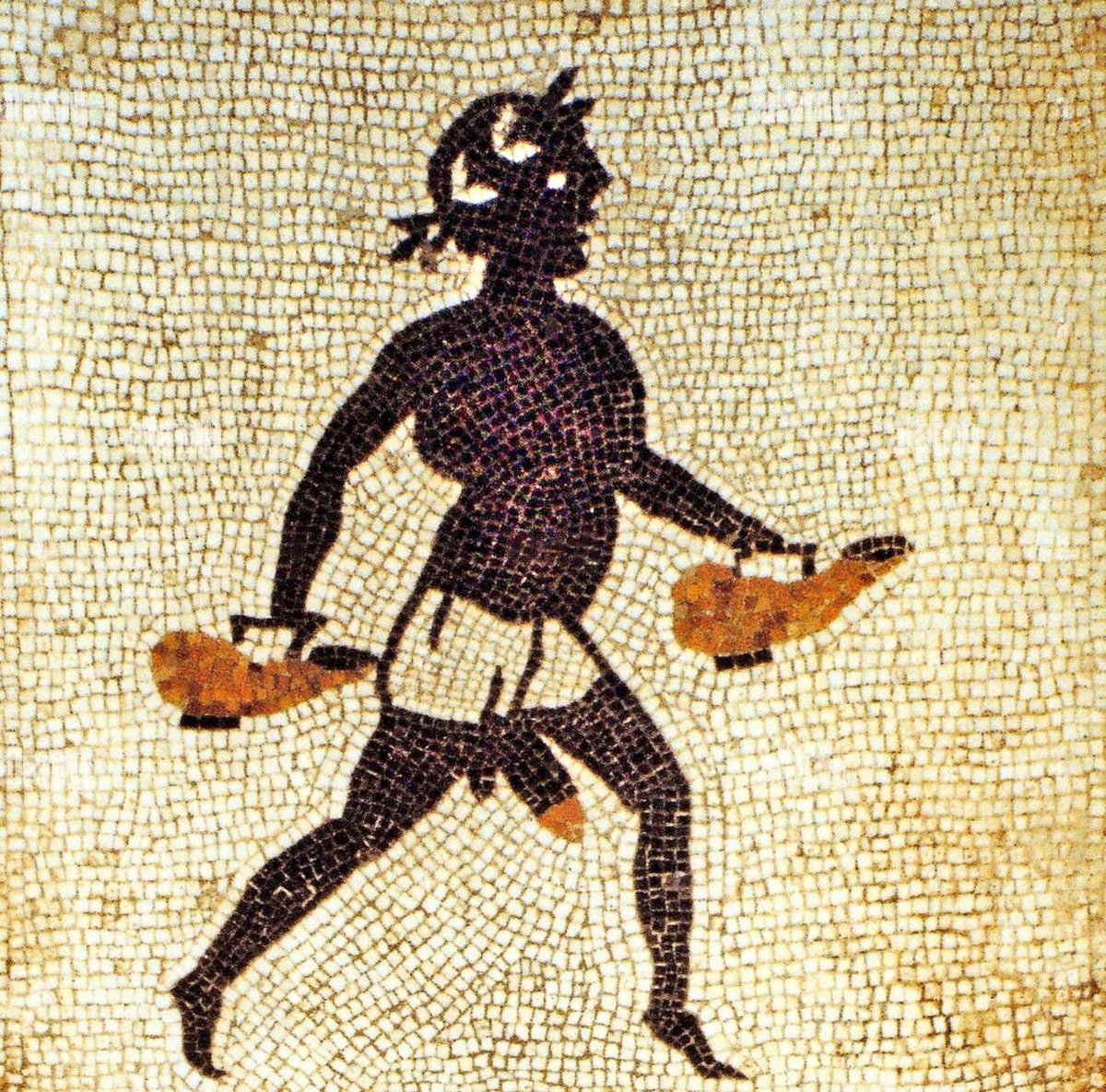
A man carrying water vessels. Roman Mosaic from the entrance to the Caldarium in the House of Menander in Pompeii. Photo Credit: Stock Photo / Alamy.
1961
Evolution of Latin Alphabet.
Work & Credit: Matt Baker - UsefulCharts.com

1962
Roman Forum, Rome, Italy. 19th century engraving.

1963
Vincent van Gogh’s Skulls, Winter 1887/88.


1964
Arachne, detail from the Ovide Moralisé, Paris ca. 1330. Collection: Bibliothèque de l'Arsenal, Ms 5069, fol. 78r. Arachne, (Greek: “Spider”) in Greek mythology, the daughter of Idmon of Colophon in Lydia, a dyer in purple.

1965
Nemrut Dagi (Mount Nemrut - Turkey) dates back to the 1st century BC and is one of the most iconic UNESCO World Heritage Sites. Mount Nemrut is full of huge statues that are around eight to nine meters in height constructed for Antiochus I of Commagene in 62 BC.

1966
Hedgehog figurine. Medium: Egyptian faience. Excavated from tomb 655 at Beni Hasan, Minya, Egypt. Date: Middle Kingdom, 12th to 13th Dynasty, ca. 1976-1793 BC. Now in the Fitzwilliam Museum.

1967
Dolphins and octopusses. Phiale with decoration in superposed colour, ca. 510–500 BC. From Eretria. Louvre Museum. PhotographerJastrow (2006) - Wikimedia Commons.

1968
Prometeus making man from clay by Constantin Hansen, c. 1845. Private collection.

1969
Bead Bracelet of Queen Ahhotep I. Material: Gold, Semi-precious stones. Second Intermediate Period, 17th Dynasty, ca. 1560-1530 BC. Now in the Egyptian Museum, Cairo. It is decorated with hieroglyphs of polished gold set in lapis lazuli.


1971
A Girl defending herself against Eros by William Adolphe Bouguereau, 1880.

1972
Detail, Roman mosaic, Basilica of Aquileia - crypt of excavations. Udine, Italy.

1973
Roman copy of Aphrodite, the Greek goddess of love and beauty, unearthed near the ruins of Sinuessa, modern-day municipality of Mondragone, Campania, Italy. Photo Credit: National Geographic, June 1981.

1974
Panathenaic amphora, ca. 530 BC. This Panathenaic amphora would have been filled with oil from the sacred olive groves in Attica, and would have been awarded as a prize to some worthy victor in one of the Panathenaic games held in Athens every four years. Source: The Met.

1975
Adam, Eve and the Serpent. Detail from the Commentary on the Apocalypse (The 'Silos Apocalypse') by Beatus of Liébana, c. 1091–1109, Spain. Collection: British Library.


Archaeology, Art, Museums, Vintage Maps, Old Photos and more. Shop account: @archaeostore Click our bio link for our designs, and more ⬇️⬇️