1926


The Lady of Elche is a limestone bust of a woman, dated to the 5th or 4th century BC. The bust was discovered on August 4, 1897, near Elche, Spain, where there is a small mountain that the Arabs called Alcudia (mound), which was almost surrounded by a river in ancient times.



1927
Detail, The Tower of Babel by Pieter Bruegel the Elder.

1928
The Stag Hunt mosaic ( c. 300 BC) is a mosaic from a wealthy home of the late 4th century BC, the so-called "House of the Abduction of Helen", in Pella. It bears the signature of the Ancient Greek artist Gnosis, of whom very little is known. Photo Credit: Stock Photo.

1929
Cosmetic dish in the shape of a dog. Date: New Kingdom, Egypt, ca. 1550–1295 B.C. On view at The Met Fifth Avenue in Gallery 117, NYC.

1930
Detail, Moonlight, Church’s Farm by Frederic Edwin Church, 1865.

1931
Snail Houses. Detail from the Secrets de l’histoire naturelle by Robinet Testard. Cognac, c. 1480-1485. Collection: Bibliothèque nationale de France, Français 22971, f. 60v.

1932
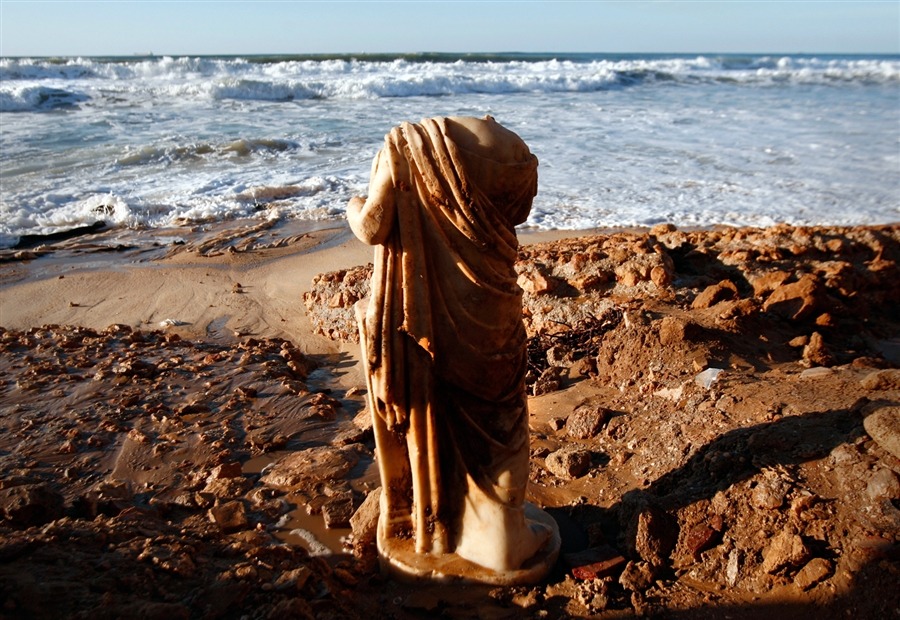
A Roman statue stands on the shore of the Mediterranean Sea in the southern city of Ashkelon, southwestern Israel. Photograph: Reuters/Stock Image.
1933
Detail from the book of Wonders of creation: Winged Fox. By Zakariya al-Qazwin, 1717 AD. Collection: Walters Art Museum.

1934
Pandora’s Box by Charles Edward Perugini (19th Century)

1935
Aztec rain god: Tláloc. Detail from the Codex Borbonicus, Teotihuacán. The Codex Borbonicus is an Aztec codex written by Aztec priests shortly before or after the Spanish conquest of Mexico.

1936
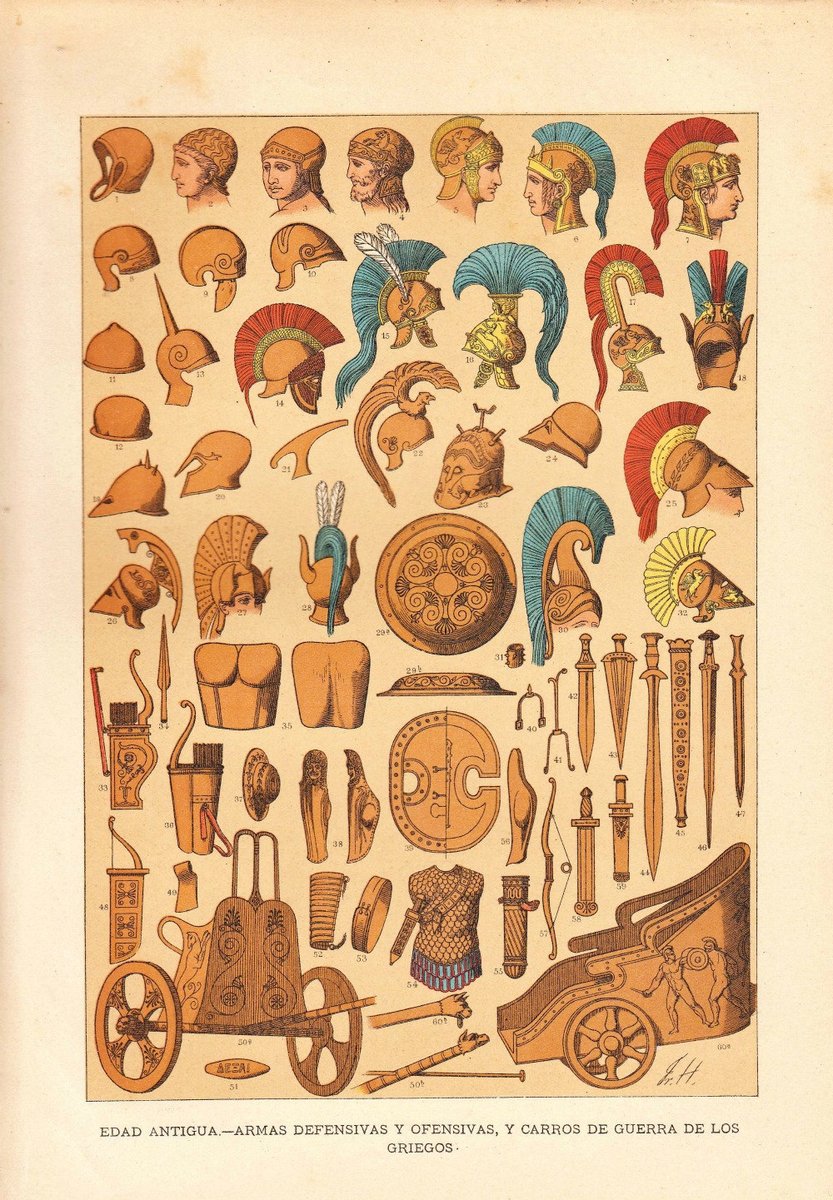
Ancient Greek Weapons and Carts, Chromolithograph, 1894.
1937
Toad-Shaped Container Carrying Sun-God Mask on Back. Place of origin: Northern Guatemala or Southeastern Mexico. Culture: Maya. Date: A.D. 600 - 90.0 Medium: Slip-painted ceramic. Collection: Los Angeles County Museum of Art

1938
Vessel Shaped like a Duck. Place of origin: Ancient Egypt. Period: Middle Kingdom Date: Between 2040 and 1783 (or 1640) B.C. Medium: Alabaster. Collection: Hermitage Museum, St. Petersburg.

1939
Circe and the Swine by Albert Goodwin (1845-1932).

1940
Globe from atop the Vatican Obelisk, thought in Medieval times to contain Julius Caesar’s ashes. Date: First half of the A.D. 1st century. Medium: Gilded bronze. Collection: Capitoline Museums. Photo: Sergey Sosnovskiy (CC BY-SA 4.0)

1941
Roman mosaic of spectators at a circus. From Gafsa, Tunisia, 5th century A.D. Photo Credit: Alamy Stock Photo.

1942
Dragon Head. Culture: Japan, Heian period (794-1185), 12th century AD. Medium: Bronze 5 1/8 x 1 1/2 x 4 5/8 in. Gift of Leslie Prince Salzman. Collection: LACMA.

1943
Colossus of Rhodes (Helios), engraving by Philips Galle, after, Maarten van Heemskerck, 1572.

1944
Sandro Botticelli, Primavera (detail), ca. 1482.

1945
Detail of the Theseus Mosaic from a Roman villa, Loigersfelder near Salzburg, Austria. Now on display at the Kunst Historisches Museum, Vienna.

1946
Four Seasons: Winter by William Holbrook Beard (1825-1900, American)

1947
Witchcraft: a witch and a devil making a nail with which to make a boy lame. Woodcut, 1720. Collection: Wellcome Collection.

1948
Rhinoceros amulet. Date: c. 200 BC–200 AD - Ptolemaic or Roman Period. Geography: From Egypt. Medium: Carnelian Dimensions: L. 1.9 × W. 0.4 × H. 0.9 cm . On view at The Met Fifth Avenue in Gallery 134.

1949
Sumerian Amulet in the shape of a Frog, c. 3500 BC. Medium: Lapis lazuli. Photo Credit & Collection: e-Tiquities.

1950
Detail, Salvator Mundi by Ambrosius Benson (Lombardy c. 1495-1550).


Archaeology, Art, Museums, Vintage Maps, Old Photos and more. Shop account: @archaeostore Click our bio link for our designs, and more ⬇️⬇️