2251


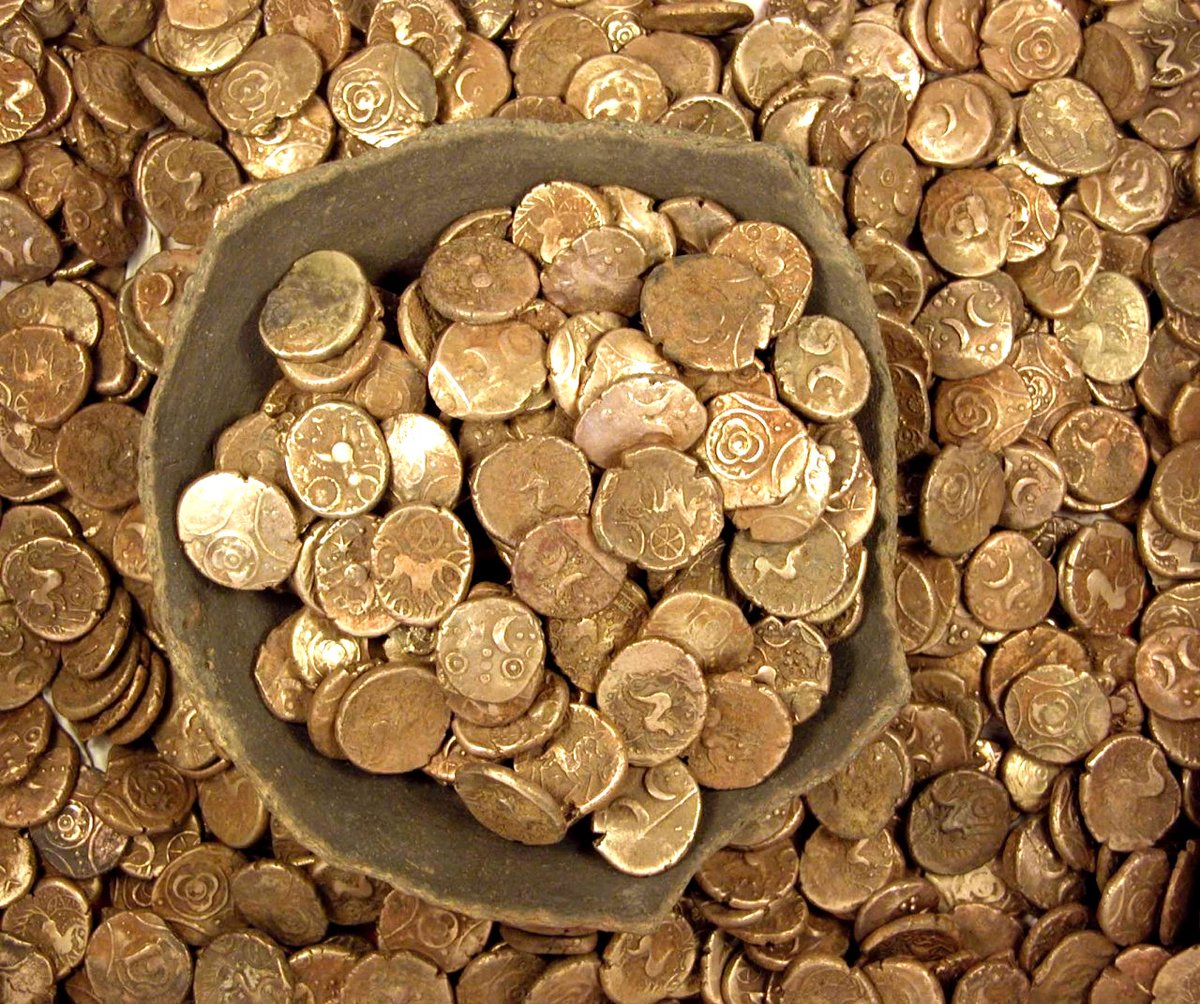
The Wickham Market Hoard is a hoard of 840 Iron Age gold staters found in a field at Dallinghoo near Wickham Market, Suffolk, England in March 2008 by car mechanic, Michael Dark using a metal detector. The coins date from 40 BC to 15 AD. Photo: Portable A. Scheme, CC BY 2.0.


2252
Attic Greek Black-Figure Cup representing Duel Scenes. ca. 530-520 B.C.

2253
Flower Diadem ornament, Egypt, 1st-3rd Century AD, Roman Period. Collection: British Museum.

2254
Kylix from Tarquinia. Dance scenes around the central medallion. In the central medallion is represented a scene of struggle between Heracles and Triton. Etruscan art. VI century BC. National Museum of Tarquinia, Italy.

2255
Aphrodite in a Shell. Place of origin: Southern Italy. Date: 3rd - 2nd century BC. Medium: Clay, polychrome painting. Now on display at the Hermitage Museum, St. Petersburg, Russia.

2256
Toy horse on wheels. Medium: painted wood. Dimensions: 7.6 cm high by 11.5 cm long. Place of origin: Roman Egypt, 1st-3rd century AD, found at Akhmim. Now on display at the British Museum.

2257
Red deer antler head-dress. Date: 8000 B.C. Period/culture: Mesolithic. Medium: Antler. Now on display at the British Museum. Excavated/Findspot: Star Carr, North Yorkshire.

2258
Moses Taken from the River. Medium: Fresco. Date: mid-3rd century AD. The synagogue at Dura Europos, Syria.

2259
The Studio Wall by Adolph von Menzel (German, 1815–1905), 1872.

2260
Greek ring dating to c. 350 BC depicting an image of the goddess Aphrodite weighing two figures of Eros. Medium: Gold. Collection of the Getty Museum.

2261
Terracotta oil-lamp depicting the fearsome sea monster Scylla. Period: Roman, c. 2nd century AD. Collection:Staatliche Antikensammlungen, Munich. Photographer: Marcus Cyron.

2262
Senwosret III as a Sphinx. Period: Middle Kingdom, 12th Dynasty; Reign of Senwosret III. Date: ca. 1878–1840 B.C. Place of origin: Egypt; Possibly from Upper Egypt, Thebes, Karnak. Collection: The Met.


2263
“Feline heads“. Geography/Culture: Peru, Moche culture, c. AD. 625–645. This large hollow bead, recovered from a looted tomb at Sipán, is one of a group of perhaps ten that formed a necklace worn by a high-ranking individual. Collection: The Met.

2264
Detail of Cesare Lapini’s Messaggio d’Amore (The Love Letter), dated to the late 19th century.Medium: Marble. Private Collection.

2265
The Holy Heart of Jesus and the Five Wounds of Christ's Love (1521), a woodcut by Sigmund Grimm.

2266
Small sculptures, hedgehog, head of a cat and head of a baboon, from late 18th Dynasty to Late Period. Now in the Egyptian Museum of Berlin.

2267
Burrup Peninsula (Murujuga, Australia) is famous for its petroglyphs. It is thought that there are more than one million petroglyphs on the peninsula. You can take a journey in the history of humankind which dates about 47.000 years ago.


2268
Boy on dolphin, 2nd century Roman bronze sculpture, Ephesus, Asia Minor, modern-day Turkey.

2269
Great helmet / Topfhelm of Hans Rieter. Date: 14th century. Medium: Iron. Collection: Germanisches Nationalmuseum, Nuremberg. Such helmets were worn by mounted fighters in battle and tournaments in the Middle Ages.

2270
“As long as the Colosseum stands, Rome shall stand; when the Colosseum falls, Rome will fall; when Rome falls, the whole world will fall.” #eternalcity

2271
Ancient Egyptian wooden box with swivel lid in the shape of a bound gazelle. New Kingdom, 18th Dynasty, ca. 1550-1292 BC. Now in the Louvre. Photographer: Hervé Lewandowski.

2272
Ba amulet from the tomb of Prince Hornakht, son of Osorkon II. The Ba amulet, found on the body of the prince assured the deceased of reunion with his soul. Gold, lapis lazuli, width: 8 cm. Date: 22nd Dynasty, ca. 874-850 BC. Now in the Egyptian Museum, Cairo.

2273
Roman carnelian intaglio, perhaps depicting Achilles, dated to the 1st century BC. The intaglio has been set in a gold ring dated to the 19th century. Private Collection.

2274
The Ram in a Thicket is a pair of figures excavated at Ur, in southern Iraq, which date from about 2600–2400 BC. One is in the Mesopotamia Gallery in Room 56 of the British Museum in London; the other is in the University of Pennsylvania Museum in Philadelphia, USA.


2275
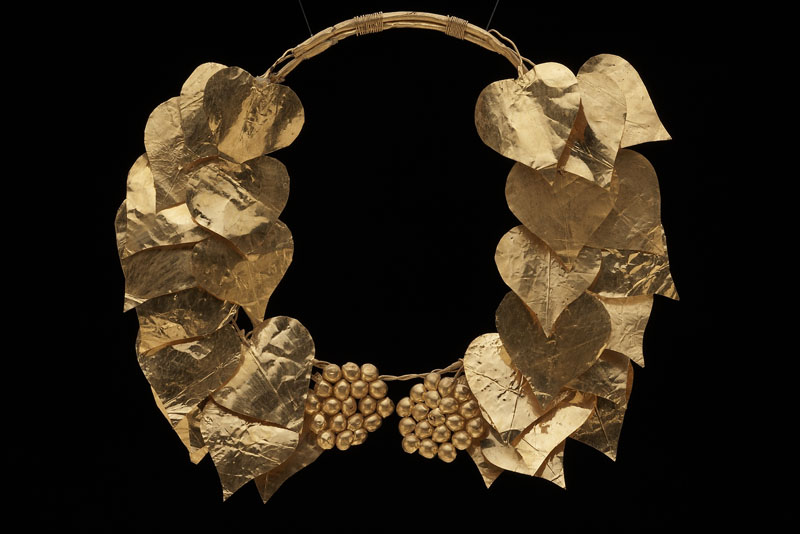
Gold Ivy and Fruit Wreath found in Chalkidike, Macedonia, Greece, late 4th century BC. Archaeologists have unearthed only two similar Macedonian wreaths. They claim that they were used by priests during Dionysus’ feast.

Archaeology, Art, Museums, Vintage Maps, Old Photos and more. Shop account: @archaeostore Click our bio link for our designs, and more ⬇️⬇️