2126


Jubilee Vessel of Pepi I. Place of origin: Egypt, Saqqara Date: ca. 2290 B.C. Period: Old Kingdom, 6th Dynasty Medium: Alabaster (calcite) and pigment.



2127
Selene thrown down by Argus (1886) by Ferdinand Keller.

2128
Painted wood funerary stele of an ancient Egyptian noblewoman named Taperet, showing her worshiping the god Horus. Date: ca. 1000-800 BC (22nd Dynasty, Third Intermediate Period). Now in the Louvre. Photo credit: Rama/Wikimedia Commons.

2129
“Absence Adorned”, glass bust sculpture by artist Karen Lamonte (B. 1967 - New York).


2131
Vessel in the Form of a Shark. Place of origin: Mexico, Colima. Date: 200 B.C. - A.D. 500. Medium: Slip-painted ceramic. Now on display at the Los Angeles County Museum of Art.

2132
Statue of Eros Sleeping, Hellenistic or Augustan 3rd century BC-1st century AD. Medium: Bronze. Metropolitan Museum of Art, NY.

2133
Colosseum, c. 1860. Photo by Raccolta de Alvariis.

2134
Relief in the Mortuary Temple of Queen Hatshepsut at Deir el-Bahari near Luxor, Egypt. Photograph: Stock Image / Shutterstock.

2135
Alexandre Cabanel, Vénus Victorieuse (1875)


2137
Mycenaean Gold Earring, Late Helladic II, 13th Century BC.

2138
Recumbent Calf from Uruk. Made of limestone and lapis-lazuli, this small model of a recumbent calf may have been a votive object, intended as an offering to Inanna, the Sumerian goddess of love, fertil. Collection: Vorderasiatisches Museum, Staatliche Museen zu Berlin.

2139
Arched Egyptian Harp, New Kingdom, 16th-11th Century BC During the 4th Dynasty (2613 to 2494 BC) harps became popular in Egypt. Two types were common; the curved or arched-neck like this one and angular models with a perpendicular neck.

2140
Etruscan lebes with five lion heads. Regolini-Galassi tomb, Cerveteri, Italy. 7th century BC. Vatican Museums, Rome, Italy.

2141
Viking silver entwined Urnes Beast brooch. Date: c. 11th century AD. Collection & Credit:Timeline Auctions.

2142
Disk with Owl. Place of origin: Peru. Culture: Moche. Date: c. 390–450 AD. Medium: Gilded copper, silvered copper, shell. Diam.: 26.7 cm. Collection: The Met, NYC.

2143
Details from the Prodigiorum et ostentarum chronicon by Lycosthenes, Conrad. Date: 1557. Collection: Royal Collection Trust.


2144
Dance of wood ghosts, Yahuna Indians. Geography: Rio Apaporis, Colombia. Photo by Th. Koch-Grunberg, c. 1900 (?). Published by Hutchinson & Co., London .

2145
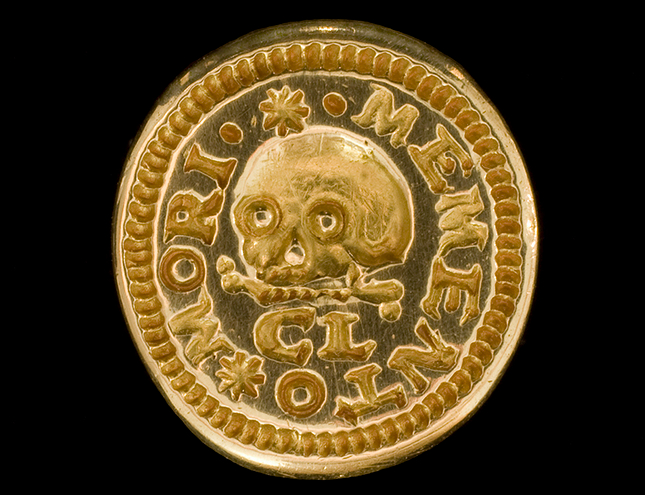
Gold memento mori ring uncovered from the Jamestown Historic Site in Virginia. Date: c. 1611 - 1617. © Jamestown Rediscovery Foundation.
2146
Details from 1st century roman mosaic of the birds in Italica, Spain. It includes 35 different species of birds framed by two geometric borders. Photos: Stock Image.


2147
Part of a muse cycle. Roman fresco (4th style) from the thermae of the Hospitium dei Sulpicii in Murecine near the Porta di Stabia of Pompeii. Photo Credit: Pompeji. Hirmer, München 2002.

2148
Gold pedant with sphinx. Place of origin: Cyprus. Date: 5th-4th century BC. Collection: The Metropolitan Museum of Art.

2149
Helmet in the shape of a sea conch. Culture: Japan. Date: 17th century. Collection: The Met.

2150
La Tène Copper Crown & Its Owner, C. 250-150 BC from Mill Hill, Grave 112, Deal, Kent, England. Copper alloy crown found in situ still on it’s owner’s skull. Now on display at the British Museum.


Archaeology, Art, Museums, Vintage Maps, Old Photos and more. Shop account: @archaeostore Click our bio link for our designs, and more ⬇️⬇️