2451


Pietro Befulco - Coronation of the Virgin Between Saint John the Baptist and Saint Jerome. Detail. 1492.



2452
Picture stone depicting a spiral motif and animals thought to be horses. Date: c. 1st-6th century AD. Collection: Gotlands Museum, Sweden. Photographer: Wolfgang Sauber via Wikimedia Commons.

2453
Carved sard plaque from a bracelet. Depicting a sphinx with a cartouche of King Amenhotep III. Culture: Egyptian. Date: c. 1390-1352 BC. Collection: Metropolitan Museum of Art.

2454
The Persians adopted the Lydian tradition of minting coins following their conquer of Lydia in 547 BC. The shown example below is of the obverse and reverse of a double daric of Artaxerxes II, ca. 330–300 BC. Cabinet des Médailles, France. Photo taken by Marie-Lan Nguyen.


2455
Wall painting depicting scene in the Nile marshes, animals in a papyrus thicket, showing a genet and a mongoose hunting among bird-filled marsh. 1550-1292 BC. Now in the Louvre Museum.

2456
Silence is also conversation by Balaji Ponna. Medium:acrylic on canvas, 2017.

2457
Head of a Cat. Place of origin: Egypt. Period: Late Period. Date: c. 712-332 B.C. Medium: Bronze. Collection: Los Angeles County Museum of Art.

2458
Ancient buddha statue under full moon - Old temple at Prasat Nakhon Luang, Ayutthaya, Thailand. Photo: Stock Image.

2459
Egypt, 1958. At the tomb of Ramses II. Photo by Elliott Erwitt / Magnum.

2460
Arachne, detail from the Ovide Moralisé, Paris ca. 1330. Collection: Bibliothèque de l'Arsenal, Ms 5069, fol. 78r. Arachne, (Greek: “Spider”) in Greek mythology, the daughter of Idmon of Colophon in Lydia, a dyer in purple.

2461
Briton Rivière - A Roman Holiday (1881).

2462
Detail, Salvator Mundi by Ambrosius Benson (Lombardy c. 1495-1550).

2463
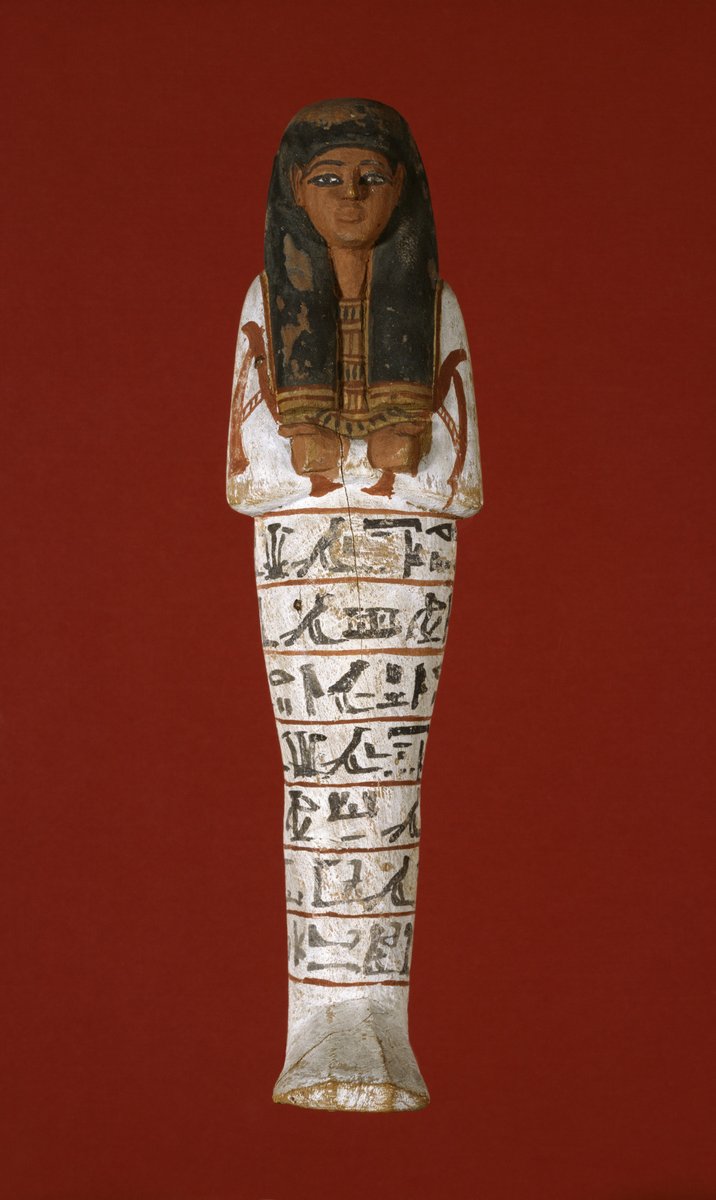
Painted wooden ushabti of Ka-ha, Chief of Painters. Artist unknown; ca. 1279-1186 BCE (19th Dynasty, New Kingdom). Found at Deir el-Medina; now in the Walters Art Museum, Baltimore.

2465
Hellenistic Greek gold ring engraved with an image of a goddess, perhaps Nike Apteros (Wingless Nike), dated to the 4th century BC. Private Collection.

2466
Hellenistic or Roman bronze head of an athlete, dated to the 2nd to 1st centuries BC, likely after a 4th century BC original by Lysippos. Currently located in the Kimbell Art Museum in Fort Worth, Texas. #museumweek

2467
Janiform kantharos with addorsed heads of a male African and a female Greek. Date: ca. 480–470 B.C. Period: Greek, Attic. The Princeton University Museum of Art.

2468
Spiral Bracelet in the Shape of a Snake.
Culture: Greek. Date: 3rd century B.C. Place of finding: Russia, Krasnodar Territory. Taman Peninsula, on Vasurinskaya Mountain. Material: gold. Collection: Hermitage Museum.

2469
Petroglyph depicting mountain sheep. Date: c. AD 600–1300. Place of origin: Sand Tank, Inyo County, California. Medium: Basalt. Collection & Credit: The National Museum of the American Indian.

2470
Souls in purgatory, looking up at the wounds of Christ and at the Sacred Heart and the Immaculate Heart. Medium: Watercolour. Date: between 1700 and 1799 (?). Collection & Credit: Wellcome Collection.


2472
Josse Lieferinxe - The Crucifixion, Detail. (1500 - 1505)

2473
German Tournament Targe. Shields of this shape were inspired by Hungarian light-cavalry shields and were adopted in Germany and Austria for the Hussarisch Turnier. The German motto around the owl reads in translation, Although I am the hated bird, I rather enjoy that. 1499.

2474
The Mulberry Tree by Vincent Van Gogh. “As long as Autumn lasts, I shall not have hands, canvas and colours enough to paint the beautiful things I see"

2475
Early Bronze Age Stone Double-Headed Disc-Shaped Figurine and Child. Place of Origin: Central/Western Anatolia, modern-day Turkey. Medium: Stone. Date: c: 3000 BC to 2500 BC. Collection - Photo Credit: Private Collection & Barakat Gallery.


Archaeology, Art, Museums, Vintage Maps, Old Photos and more. Shop account: @archaeostore Click our bio link for our designs, and more ⬇️⬇️